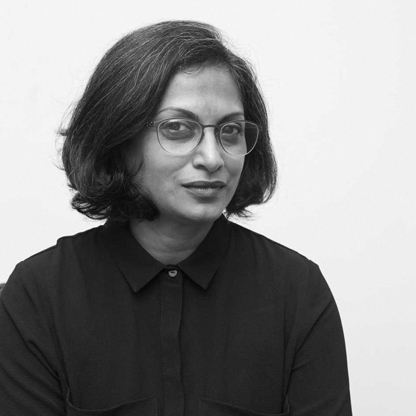
Marina Tabassum
Founder of MTA Architects, Dhaka, Bangladesh
Founder of the Foundation for Architecture and Community Equity (FACE)
Marina Tabassum (born in Dhaka) graduated from Bangladesh University of Engineering and Technology in 1994 and founded the architectural firm URBANA in Dhaka, Bangladesh, with Kashef Chowdhury in 1995.
Tabassum established her own practice in 2005, Marina Tabassum Architects. Among her major works are the Museum of Independence, Dhaka (2006), the Bait Ur Rouf Mosque, Dhaka (2012), which has made her known throughout the world, the AR Tower, Dhaka (2015), and the Hamidur Rahman Community Center, Dhaka (2019). She is the founding president of the Foundation for Architecture and Community Equity (FACE).
Since 2005, Marina Tabassum has devoted much of her time to teaching, as a visiting professor at a number of international universities, including the Harvard Graduate School of Design, Delft University of Technology, University of Texas, and University of Toronto, as well as, in Bangladesh, at BRAC University, founded in 2001, where she has taught courses on contemporary South Asian architecture, and at the University of Asia Pacific. From 2015 to 2021 she served as Director of Academic Programs at the Bengal Institute for Architecture, Landscapes and Settlements, Dhaka.
International awards received by Marina Tabassum include: Architect of the Year Award, India (2001); Aga Khan Award for Architecture (2016); Arnold W. Brunner Memorial Prize (2021); The Soane Medal (2021); and Lisbon Triennale Lifetime Achievement Award (2022). She also served as a member of the steering committee of the Aga Khan Award for Architecture.
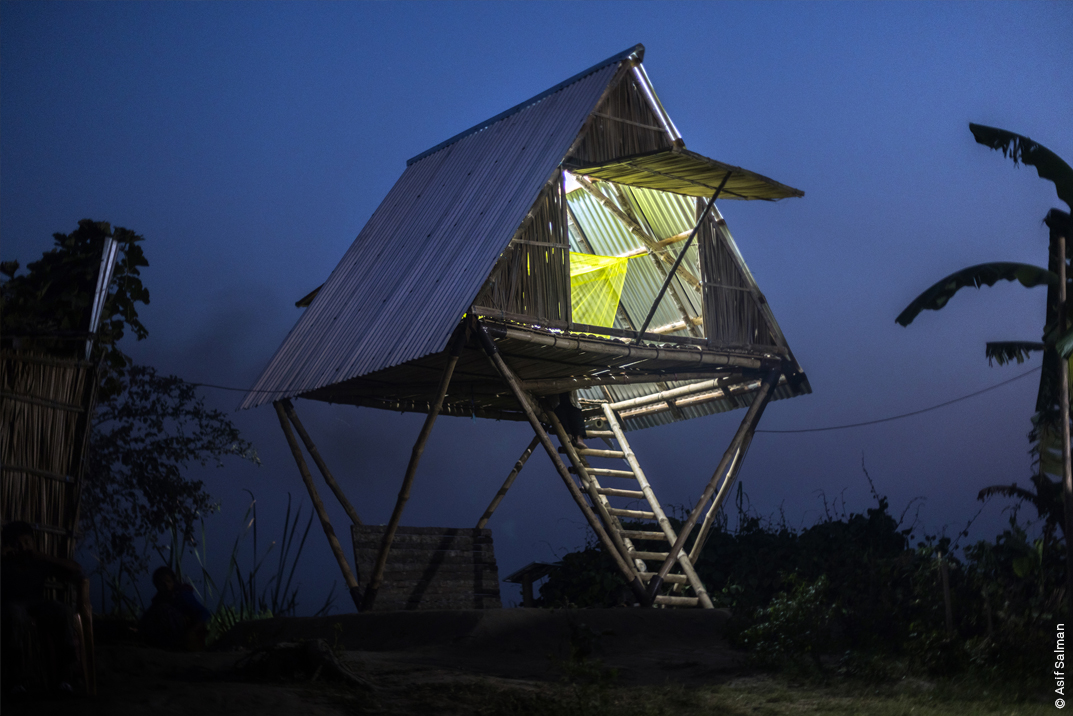
I bring students from all over the world to Bangladesh. The focus is on fostering a deep understanding of the local context, they need to comprehend it with all of their senses. This is because design, in my view, extends beyond problem-solving; it involves creating a language absorbed through firsthand experience.
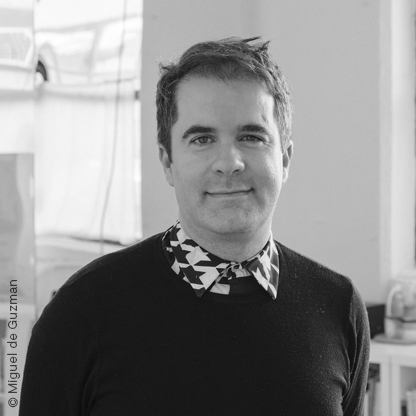
Andrés Jaque
Founder of the Office for Political Innovation – OFFPOLINN, Madrid, New York
Dean of the Graduate School of Architecture, Planning and Preservation, Columbia University
Andrés Jaque (born in Madrid, Spain) is an architect, writer, and curator. He earned both his master’s degree and his Ph.D. in architecture from the Escuela Técnica Superior de Arquitectura de Madrid (ETSAM), Spain. During his student years, he was an Alfred Toepfer Stiftung’s Tessenow Stipendiat from 1988 to 2000. He founded his own practice Andrés Jaque Arquitectos in 2000, and three years later, in 2003, he established the Office for Political Innovation (OFFPOLINN). The purpose was to introduce a trans-sectional approach, focusing on the intervention of complex composites of relationships within architectural design. OFFPOLINN has evolved into an international practice encompassing design, research, and environmental activism, based in both New York and Madrid.
Andrés Jaque has served as a guest professor at numerous universities, including the universities of Madrid, Valencia, and Alicante in Spain, the Instituto Politecnico in Milan, ETH Zurich, Princeton University, and Cooper Union in New York. His affiliation with the Columbia Graduate School of Architecture, Planning and Preservation (GSAPP) began in 2013. Andrés Jaque assumed the role of director of the Advanced Architectural Design Program in 2018, and later, in 2023, was appointed as dean.
Awards received include the Frederick Kiesler Prize for Architecture and the Arts (2016) and the Silver Lion for Best Research Project at the 14th Biennale of Architecture of Venice (2014). He was co-curator of Manifesta 12 in Palermo, The Planetary Garden (2018), and Chief Curator of the 13th Shanghai Biennale, Bodies of Water (2020).
Publications by Andrés Jaque and OFFPOLINN include: Superpowers of Scale (Columbia University Press, 2020) and More-Than-Human (Idea Books, 2020).
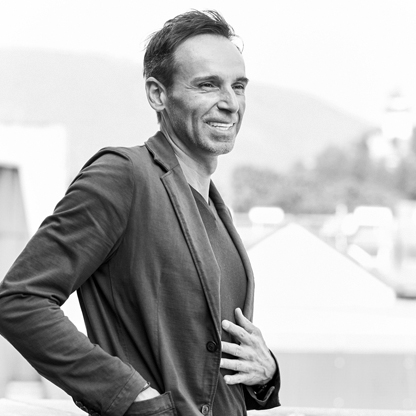
Klaus K. Loenhart
Founder and CEO of Studio terrain: integral designs, Munich, Germany
Director of the Institute of Architecture and Landscape (IA&L), Graz University of Technology, Austria
Founder and director of the laboratory LandLab, Graz University of Technology
Klaus K. Loenhart graduated in 1994 from the Department of Architecture, Munich University of Applied Sciences. After a collaboration with Herzog & de Meuron, he attended the Harvard Graduate School of Design, graduating with degrees in history and theory in 1999, and in landscape architecture in 2000.
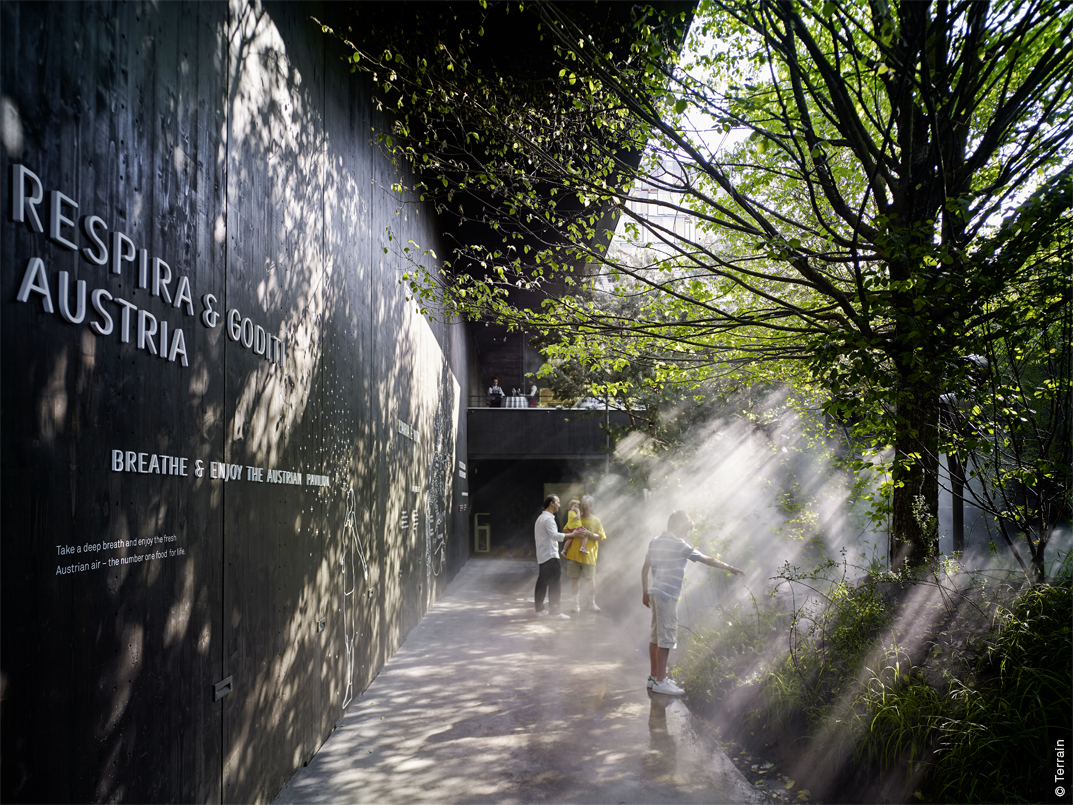
Back in Munich, he founded his own practice in 2002. The firm terrain: integral designs focuses on bioclimatic experimental architecture, like the headquarters of Grüne Erde in Austria (2020) or the Austrian Pavilion, breathe.austria, at the Expo 2015 in Milan, which received the UNESCO Design Cities – Grand Award in 2016.
His career as a professor and researcher, which began at the Munich University of Applied Sciences, continued at the Harvard Graduate School of Design, as a teaching fellow in architecture and contemporary landscape theory (1999–01), then at Graz University of Technology, as director of the Institute of Architecture and Landscape (IA&L) (2007–), and as founder and director of LandLab (2009–).
Publications by Klaus K. Loenhart include: Breathe! Investigations into Our Atmospherically Entangled Future (Birkhäuser, 2021) and All of Us, Dasein Is Co-Design (IA&L, Graz, forthcoming 2025).
Awards received by Loenhart include: 2000 Gerald McCue Medal, “for the highest academic achievement of a Master’s thesis,” Harvard University; Balthasar Neumann Prize 2008, with honors; German Structural Engineering Prize 2010; Styrian Architecture Award 2011; Austrian Timber Construction Award 2019, first prize; Austrian National Design Award 2019, first prize; Green Good Design Award 2020; and Austrian Innovation and Sustainability in Architecture 2022, first prize.
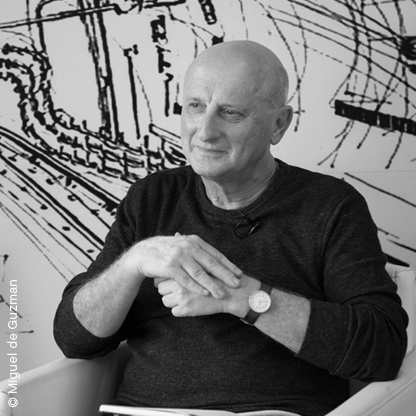
Ciro Pirondi
Founder of Ciro Pirondi Arquitetos Associados, São Paulo, Brazil
Cofounder and former director of Escola da Cidade, São Paulo
Director of the Fabrica – Escola de Humanidades “João FilgueirasLima,” Escola da Cidade, São Paulo
Ciro Pirondi (born in São Paulo, Brazil) is an accomplished architect and urban planner. He earned his degree in architecture and urbanism from the Universidade Braz Cubas in São Paulo, Brazil, and completed his Ph.D. at the Universitat Politècnica de Catalunya in Barcelona, Spain. In 1983, he founded his architectural firm, Ciro Pirondi Arquitetos Associados, which focuses on the revitalization of public spaces and favelas. Noteworthy among his contributions is the masterplan for the Paraisópolis favela, developed in collaboration with Ruben Otero and Anália Amorim.
Pirondi is also committed to preserving the heritage and archives of Brazilian modernist architects. His portfolio includes the renovation of Oscar Niemeyer’s Copan Building, one of the world’s largest residential skyscrapers. Notably, he served as the director of the Casa de Lúcio Costa and as the president of the Vilanova Artigas Foundation. Currently, he serves as executive director of the Oscar Niemeyer Foundation.
Pirondi has also held various academic roles. From 1992 to 1996, he was coordinator of architecture and urbanism at Universidade Braz Cubas in Mogi das Cruzes, Brazil. From 1990 to 1999, he served as a professor in the Faculdade de Arquitetura e Urbanismo do Mackenzie in São Paulo. In 2002, he cofounded the Escuela da Cidade, serving as its director from 2002 to 2019.
Currently, Pirondi leads the Fábrica – Escola de Humanidades “João Filgueiras Lima,” a high school created by Escuela da Cidade, which shares the university’s space and teaching methods. As a guest lecturer at the Università Iuav di Venezia (IUAV), he contributed to the “Architecture as a Human Right” course and collaborated on multiple occasions with WAVE. Pirondi is also the author of A City for Everyone, published by Incipit Editore in 2017.
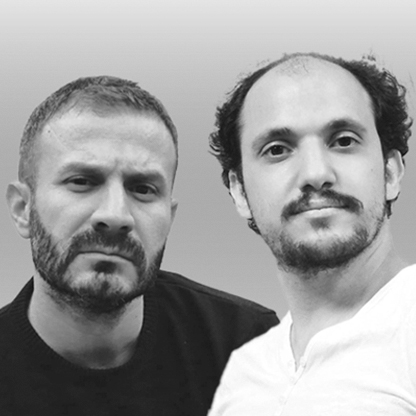
Wesam Al Asali and Iyas Shahin
Cofounders of IWLab
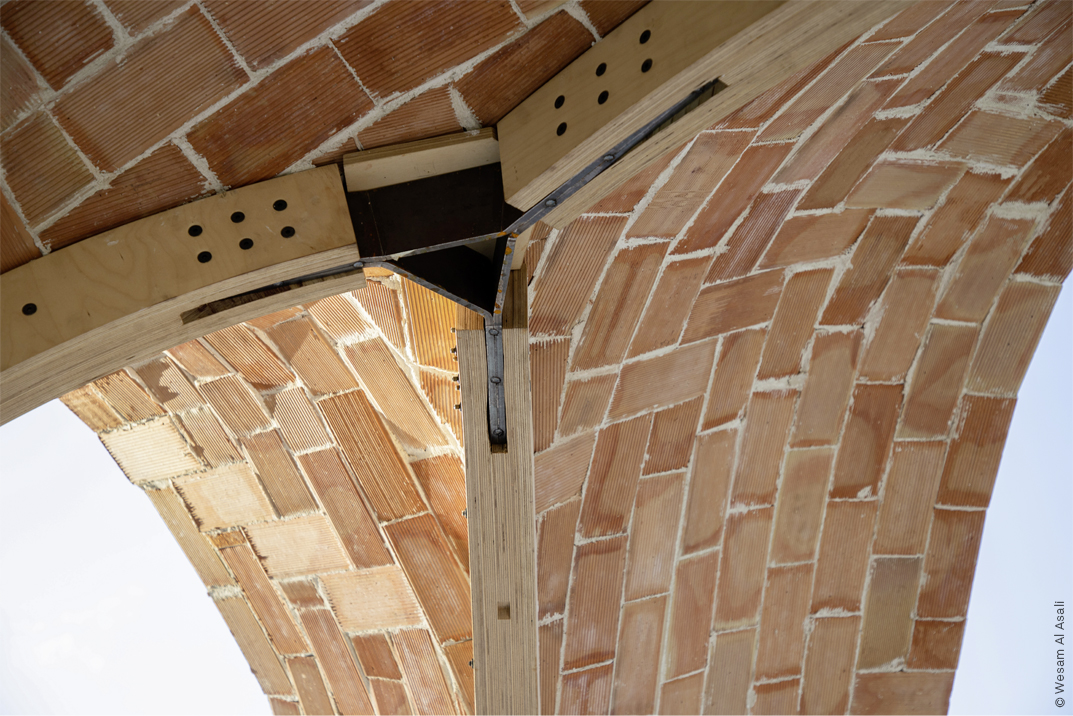
Wesam Al Asali (born in Syria) is an architect, educator, and researcher who graduated from Damascus University’s Faculty of Architecture, Syria, before pursuing further studies at the University of Cambridge, United Kingdom. He earned a master’s degree in architecture and urban studies in 2016 and a Ph.D. in architecture in 2021, focusing on design strategies for thin-tile vaults for low-carbon ceiling systems. He served as a postdoctoral researcher at the University of Cambridge and a Fung Global Fellow at the Princeton Institute for International and Regional Studies, New Jersey, from 2021 to 2022. His research, funded by various institutions, focuses on natural materials in Spanish building crafts and scarcity-driven architecture in the Middle East. Engaged in teaching at multiple universities, he is currently the coordinator and professor of design studios and experimental workshops at IE University in Madrid, Spain.
Al Asali has received several prestigious awards, such as the Clare Hall Salje Medal for the best Ph.D. in the arts and humanities, the Royal Institute of British Architects’ (RIBA) President’s Medal for Research, and the Journal of the Society of Architectural Historians’ Founders’ Award.
Iyas Shahin (born in Damascus, Syria) is an architect, researcher, and artist who holds a master’s degree in architectural/urban design from Damascus University (2013) and a Ph.D. in housing (2017). Alongside Wesam Al Asali, he co-established IWLab in 2009, a multidisciplinary entity with a primary focus on cultural and architectural design. His work explores the role of architecture in crises, cultural heritage awareness, and spatial justice. Since 2021, Shahin has delved into experimental documentaries, utilizing them as a tool for criticism and the architectural observation of cities.
Shahin’s teaching activities include serving as an academic lecturer and tutor in the Faculty of Architecture at Damascus University since 2008, as well as numerous academic workshops and cultural participations abroad, including in the UK (Cambridge University), Denmark (Royal Academy of Fine Arts, Copenhagen), Germany (Cottbus University), and Finland. Conferences attended by Iyas Shahin include: Reconstructing Neighborhoods of War – International Conference OIB (2018), Spatial Justice –1st Damascus Conference for Reconstructing Damascus University (2019), Architecture as Craft – Informality for Reconstruction Damascus University (2019), and the 6th Conference Producing Critical Knowledge in the Arab Region ACSS (2023).