
Andreas Kipar
Born in 1960 in Gelsenkirchen, Germany, Andreas Kipar holds degrees in landscape architecture (GHS University Essen, Dipl.-Ing.) and architecture and urban planning (Politecnico di Milano, Dott. Arch.).
In 1990 he cofounded LAND, an international landscape architecture and consultancy firm with offices in Austria, Canada, Germany, Italy, Saudi Arabia, and Switzerland.
Since 2009, Andreas Kipar has served as visiting professor at the Politecnico di Milano, where he teaches landscape architecture and public space design. He is a full member of the German Academy for Urban and Regional Planning (DASL), the Association of German Landscape Architects (BDLA), the Italian Association of Landscape Architects (AIAPP), and the Italian Institute for Urban Planning (INU). In 2007 he was awarded the Federal Cross of Merit on Ribbon for his voluntary work in German-Italian exchange. Since November 2023, he has been a member of the global task force of experts for the Nature-Positive Cities initiative of the World Economic Forum. In 2024, he was awarded the Halstenberg Prize by the DASL of North Rhine-Westphalia, Germany, for outstanding and pioneering achievements in urban and regional planning.
Andreas Kipar is the originator of Milan’s “Raggi Verdi” (green rays) model, which links different urban areas to promote a new slow mobility from the center to the periphery. This model has also been applied in Essen, the 2017 European Green Capital. He also provides strategic advice in the areas of landscape, infrastructure, and renewable energy and participates in research and innovation projects. His work has been recognized with international awards, including the Mercury Prize, the MIPIM Award, the Wan Awards, the Biennale di Pisa, the Passive and Low Energy Architecture Award (PLEA), and the 2023 European Garden Award.


Ye Man
Born in 1985 in Shangrao, Jiangxi province, China, Ye Man first graduated from Tongji University in 2007 with a degree in polymeric materials engineering.
Initially engaged in sustainable materials research, she turned to architecture after exploring the historic sites in The Complete Works of Liang Sicheng, captivated by the harmony between traditional Chinese buildings and their natural surroundings. Ye Man subsequently earned degrees in architecture and urbanism from Tongji University and the Bauhaus-Universität Weimar.
Her graduate research addressed ecological urbanism in Nordic countries and the material language of sustainable architecture, with comparative studies of BedZED in London and the Zero Carbon Pavilion at the Shanghai Expo 2010.
After completing her studies, she joined the studio of Professor Fudong Dai, a member of the Chinese Academy of Engineering, where she contributed to a number of major architectural projects. As general secretary of the Tongji Green Building Council for nearly a decade, she played a key role in developing green building assessment standards and advancing sustainable design practices through international collaboration.
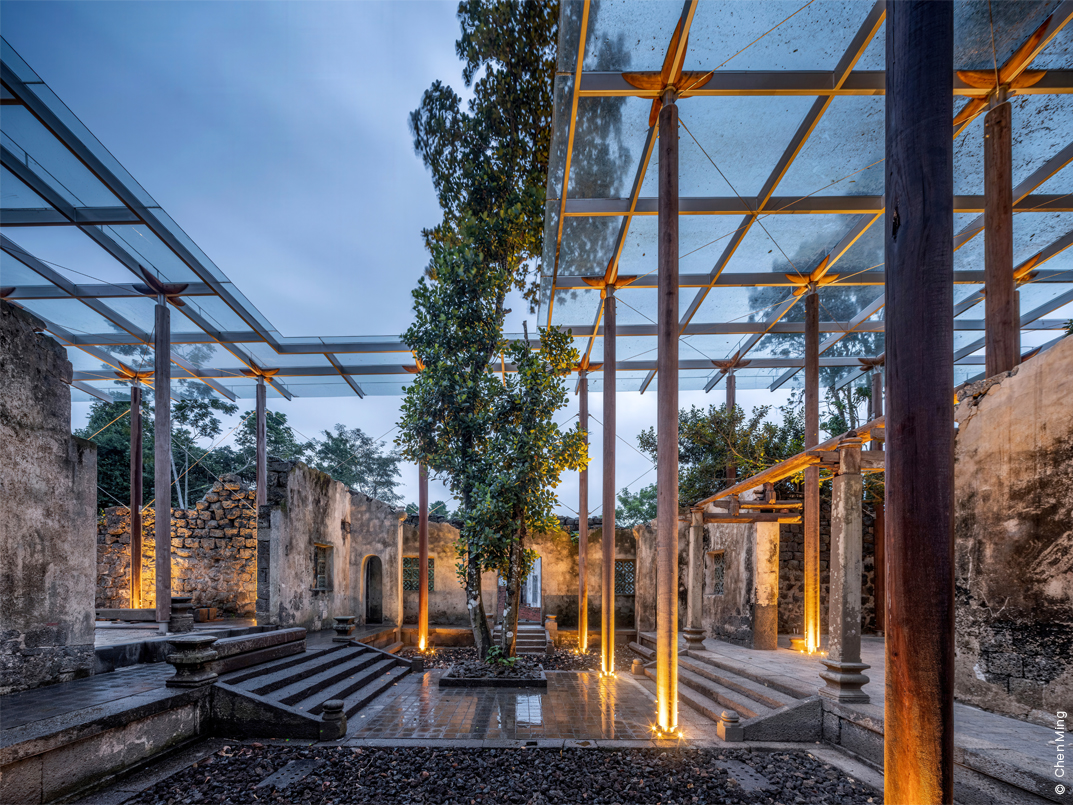
Since 2015, Ye Man has pursued an independent architectural practice centered on soft-jointed structural systems and traditional mortise-and-tenon wood construction through contemporary prefabrication methods. Her first independent work, Qian Tong House, was exhibited at the Venice Biennale in 2016 and at the Shanghai Urban Space Art Season (SUSAS) in 2017. In 2019, she founded ZSYZ Studio.
Ye Man’s academic engagements include positions as guest lecturer at Tianjin University and Southeast University and studies in Chinese classical landscape gardening at the China Academy of Art. Her publications include “Rethinking Wood Joints” in Time + Architecture, a recognized RCCSE Chinese Core Academic Journal.

Amelia Tavella
Born on the island of Corsica, Amelia Tavella graduated from the École Spéciale d’Architecture in Paris in 2004 with a degree in architecture and studied urban planning, development, and construction at the Aix-Marseille Institute. She also holds a certification in environmental approaches to urban planning from the Marseille School of Architecture. Her academic training combines architecture, urbanism, and environmental design.
In 2007, Tavella established her own practice in Aix‑en‑Provence; the firm relocated to Paris in 2025. Her work frequently addresses heritage and educational contexts, integrating new interventions with existing structures and local materials.
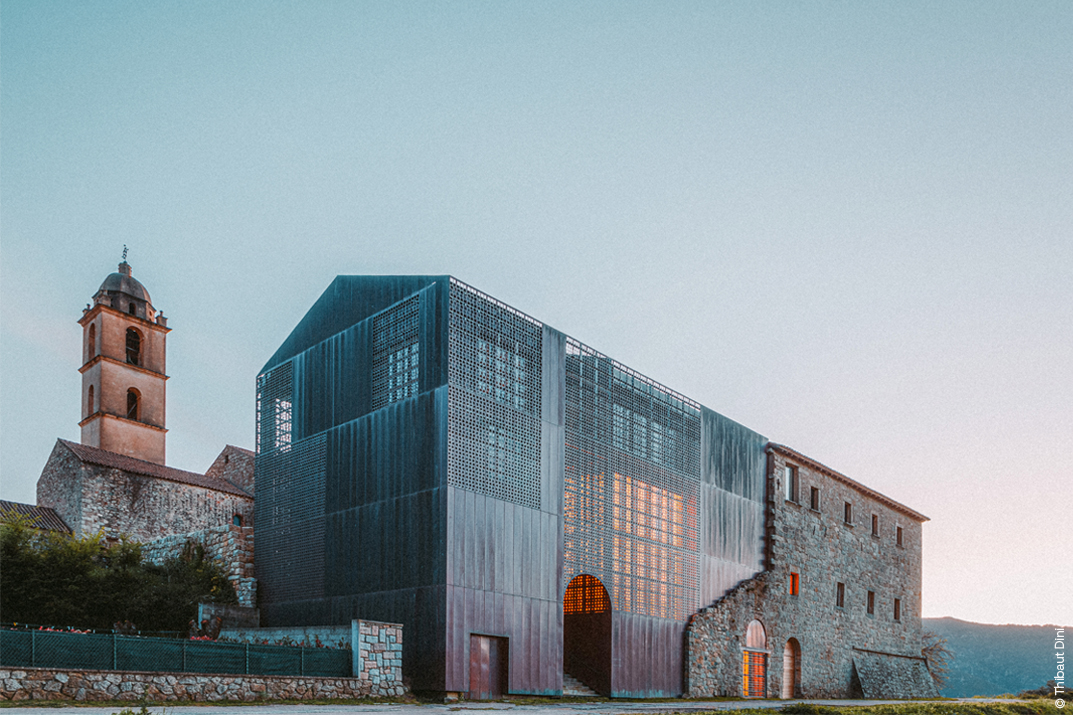
In 2021, Tavella was appointed Chevalier of the National Order of Merit by the Grand Chancellery of the Legion of Honor, France. Her project for the Convent of St. Francis was shortlisted as a finalist for the 2024 European Union Prize for Contemporary Architecture – Mies van der Rohe Award.
She has served as a jury member for the Archiproducts Design Awards (2023, 2024). Other recognitions include the Médaille d’Architecture – Prix Dejean of the Académie d’Architecture (2022) and first prize in the TECU European Architecture Awards (2022).
Amelia Tavella contributes to artistic and academic discourse through her activity as a jury member as well as through workshops and exhibitions. She has participated in conferences including “Architecture and History,” Rome, 2025; Architecture Days – Maison Européenne de l’Architecture, Karlsruhe, 2024; and YACademy – Architecture for Heritage, Bologna, 2023.
Her work has been featured in publications including Architecture d’Aujourd’hui Hors – Série monographique (2025); Beautiful Houses by the Water (2023); Firenze Architettura (2022); Life’s a Beach (2021); and Femmes qui font la Corse (2021).
Doan Thanh Ha
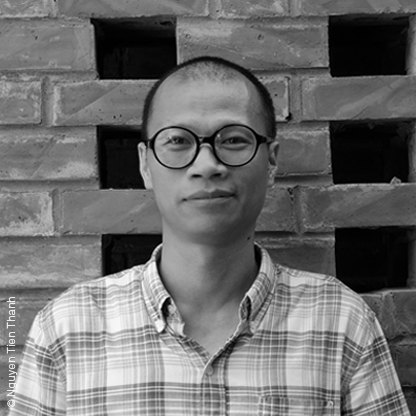
Born in 1980 in Bắc Ninh, Vietnam, Doan Thanh Ha graduated from Hanoi Architectural University in 2002.
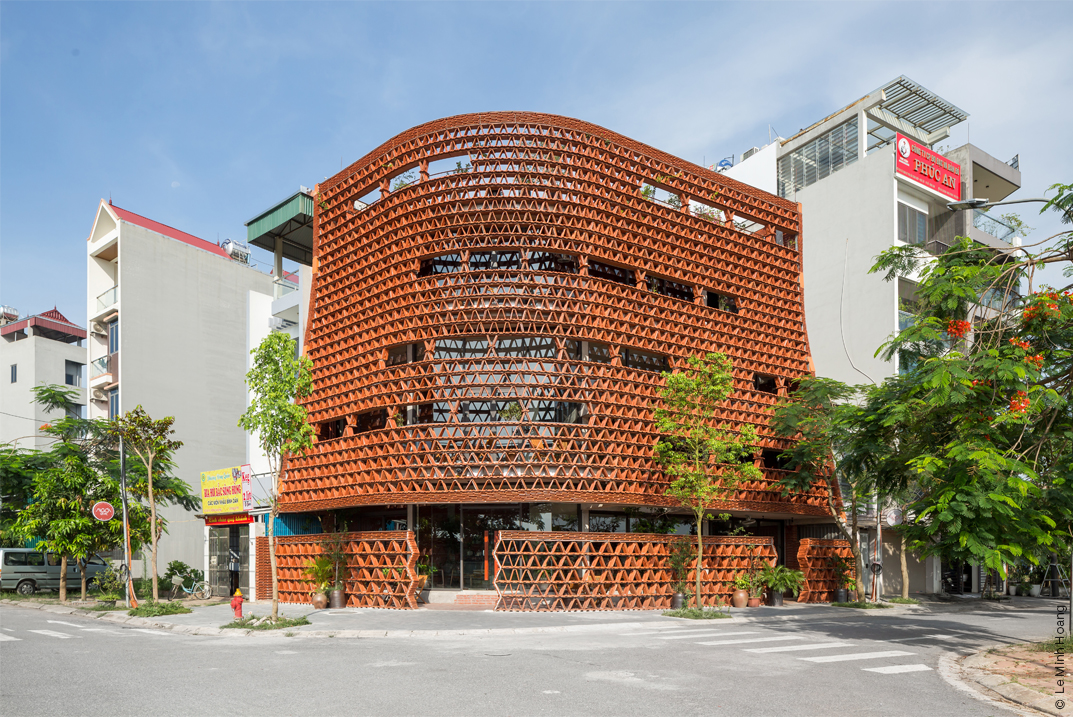
In 2009 he co-founded H&P Architects based in Hanoi, an office committed to community-oriented and sustainable design.
His projects often explore the intersection between vernacular architecture and modern needs, using natural and locally available materials to foster resilience and cultural continuity.
Doan Thanh Ha’s approach has garnered him awards including the ARCASIA Award for Architecture, 2024; the UIA Vassilis Soutas Prize, 2023; the Turgut Cansever International Award, 2020; the FuturArc Green Leader ship Award, 2019; Vietnamese Architect of the Year, 2018; and the 2A Asia Architecture Award, 2017.
In his work, Doan Thanh Ha demonstrates how architecture and design can serve as a medium for social engagement, environmental responsibility, and the redefinition of contemporary Vietnamese identity. To contribute to the global discourse, he has been invited to speak at international conferences, including most recently the UIA International Forum, Malaysia, 2024; the Circular Strategies Symposium 4 at the University of Applied Arts, Vienna, 2023; the Vietnam Congress of Architects, 2023; the Mockchun Lecture, Seoul National University, Korea, 2022; and the symposium “Josef Frank and the Social Dimension in Contemporary Housing,” Architekturzentrum Wien, Vienna, Austria, 2022.
He has served as a jury member for events including the UIA International Ideas Competition for Young Architects: “The Future of the Profession – Empowering the Next Generation in Participatory Urban Design,” Italy, 2025; The Dwelling 2023 Architecture Competition, Vietnam, 2023; TEAM20 Architecture and Planning Graduation Projects Competition, Taiwan, 2020; Tiny Library Architecture Competition, India, 2019; and World Architecture News Awards, UK, 2015.

Loreta Castro Reguera & José Pablo Ambrosi
Born in 1979 in Mexico City, Loreta Castro Reguera studied architecture at the School of Architecture of the Universidad Nacional Autónoma de México (UNAM) and earned degrees in architecture from the Mendrisio Academy of Architecture in Switzerland and in urban design from the Harvard Graduate School of Design.
She is a professor at the School of Architecture UNAM and has served as a guest lecturer at various universities around the world, including the Harvard Graduate School of Design, the University of California, Los Angeles (UCLA), and the Università Iuav di Venezia (IUAV). She is member of the National Academy of Architecture in Mexico and is part of the National System of Art Creators of the Ministry of Culture in Mexico.
Born in 1979 in Mexico City, José Pablo Ambrosi studied architecture at UNAM and at the Universitat Politècnica de Catalunya (UPC) Barcelona, where he was part of Carlos Ferrater’s Cátedra Blanca studio.
From 2012 to 2014, he pursued an MBA at the Instituto Panamericano de Alta Dirección de Empresas (IPADE). He is also part of the National System of Art Creators of the Ministry of Culture of Mexico and is developing a project on self-constructed housing in Mexico. He has taught as an invited professor at several universities, including IUAV and UCLA.
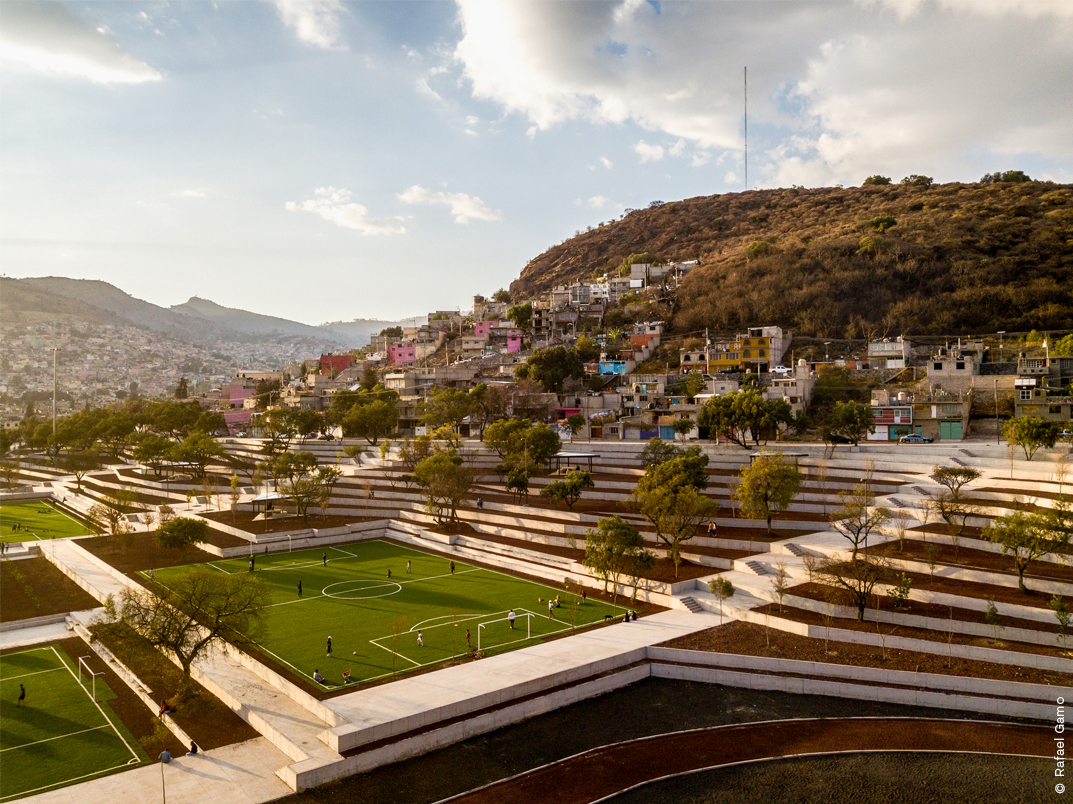
Loreta Castro Reguera and José Pablo Ambrosi co-founded Taller Capital in 2010, specializing in projects in which design acts as a tool to enhance urban conditions through housing densification and the creation of public infrastructural spaces. In their research and practical work, they seek to redefine the role of water in urban spaces, exploring innovative methods for incorporating the cycle of water into everyday urban life through adaptive and sustainable infrastructure solutions.
Taller Capital has been featured in publications including Women in Architecture (2023), Retroactive (2022), Infrastructural Public Spaces for the Information City (2020), and Rebuilding after Disaster: Children’s Recreational Center in Juchitán (2020). Their work has earned numerous awards including the IFLA Award Latin America (2024); the Silver Medal at the XVII Mexican Architecture Biennial (2022); the Emerging Voices Award, Architectural League of New York (2020); and the Global Gold Award of the Holcim Foundation for Sustainable Construction (2018).